Why Text Copied from PDFs Breaks on Every Line
Almost everyone who has copied text from an Adobe PDF into Word or Google Docs has encountered the dreaded "broken column" problem. But why does this happen?
Unlike Microsoft Word or HTML webpages, which treat text as flowing, responsive streams of characters, the Portable Document Format (PDF) was designed in 1993 as a digital print specification. Its primary mandate is absolute visual fidelity: every character has hardcoded X/Y coordinates on a 2D canvas.
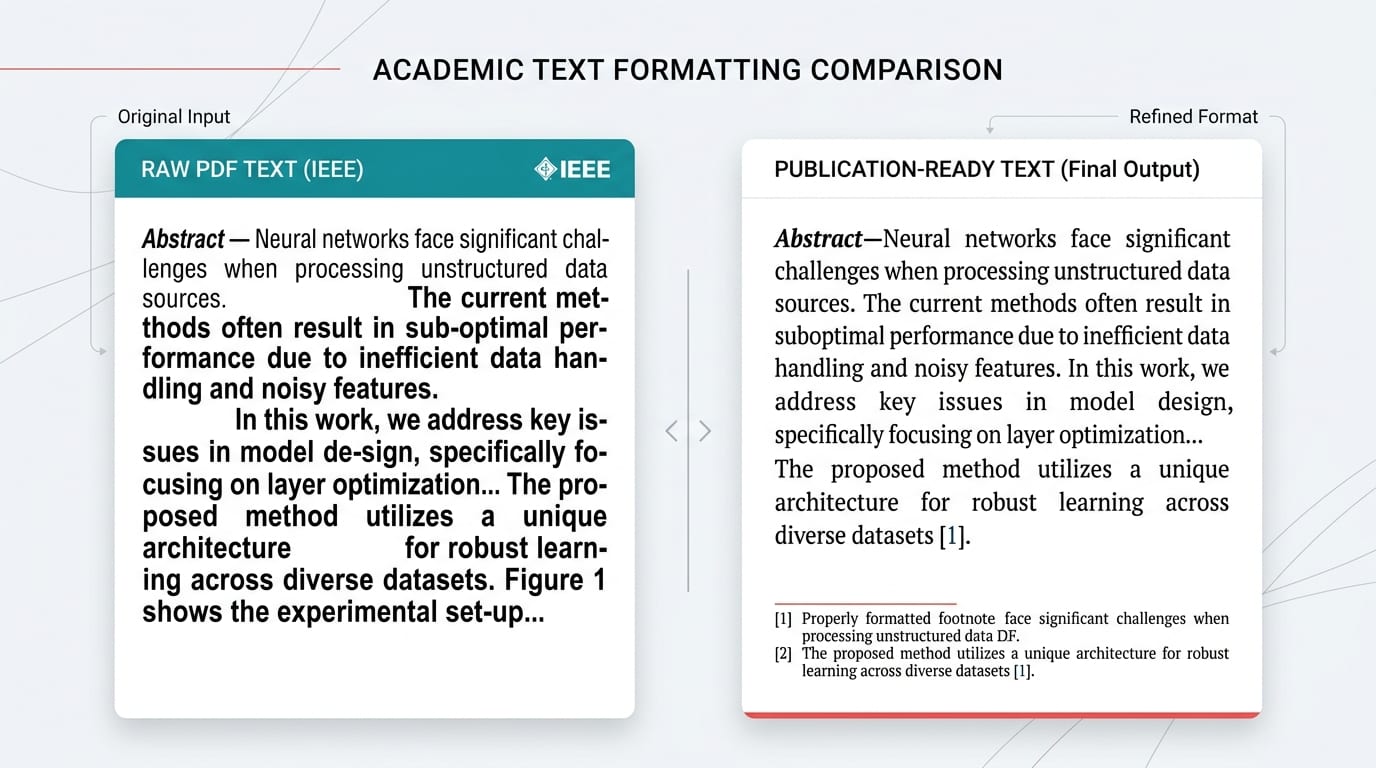
When a PDF renders a paragraph across 5 lines, the PDF file does not store a paragraph container; it simply paints 5 independent text segments on screen. When your PDF viewer's cursor highlights and copies those characters, it interprets the horizontal margin jump as a carriage return (\r\n). Consequently, every single line ending becomes a hard break.
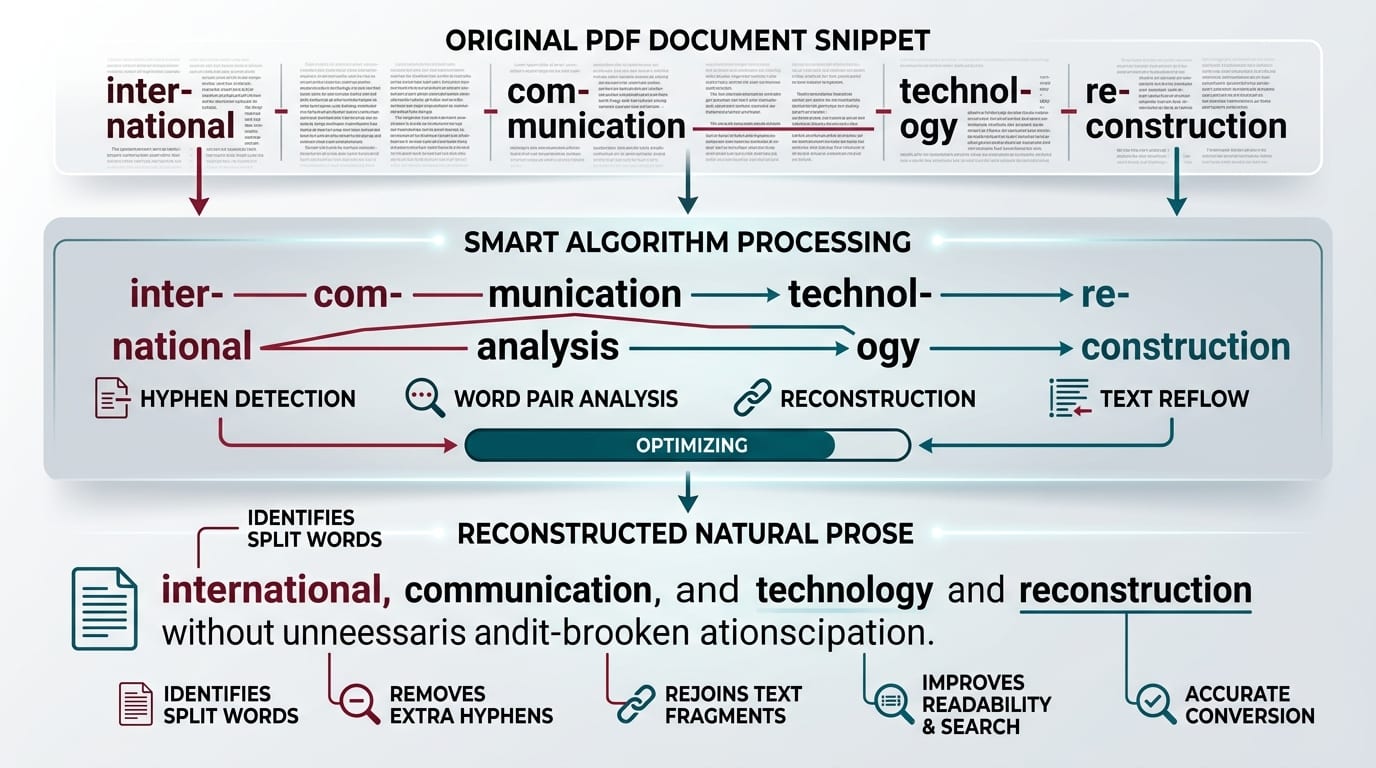
Compounding the issue, typesetting engines in PDF publishers intentionally insert hyphens at line endings (e.g., inves- \n tigation). Standard text editors have no way to distinguish between a hyphen that belongs to a hyphenated compound word (like "state-of-the-art") and a typesetting wrap hyphen.